Split Decisions: How Live Race Analytics Are Reshaping Training Plans and Competitive Tactics
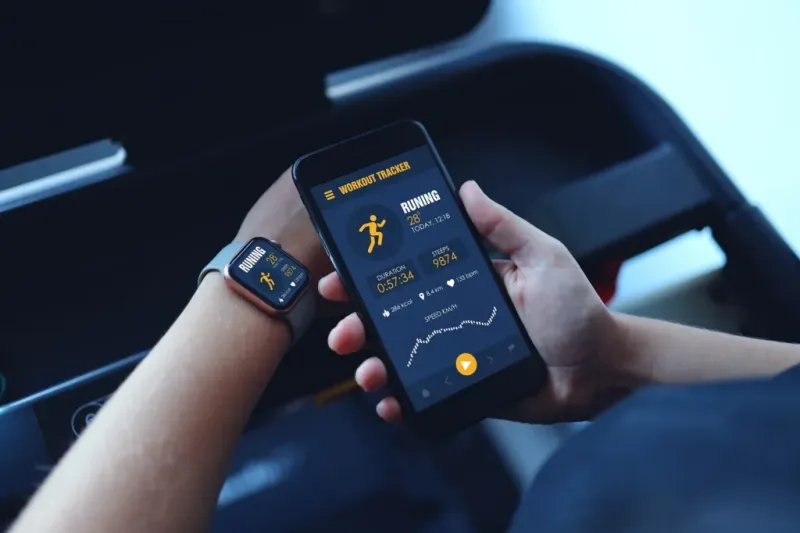
Photo: runner with smartwatch data analytics on track, via istarmax.com
For most of running's recorded history, a coach's most sophisticated tool was a handheld stopwatch and a yellow legal pad. Splits were called out at mile markers, scribbled in notebooks, and reviewed over coffee the following morning. Today, a single chip-timed training run can generate hundreds of data points—cadence fluctuations, vertical oscillation, real-time pace variance, and competitor positioning—all transmitted to a smartphone before the athlete has finished her cool-down stride. The question is no longer whether this information is available. The question is who knows how to use it.
From the Track to the Cloud
The infrastructure behind modern timing has matured rapidly. Radio-frequency identification (RFID) mats, deployed at intervals as frequent as every kilometer in elite events, now feed data into cloud platforms that parse and redistribute it within seconds. Athletes and their support teams can monitor live splits through dedicated apps, while broadcast partners overlay positional graphics that would have seemed like science fiction at the 1984 Los Angeles Olympics.
What began as a spectator convenience has become a tactical weapon. At major American marathons—Boston, Chicago, New York—pacing teams and coaching staff positioned along the course receive split notifications the moment their athlete crosses a timing mat. Adjustments that once required a post-race debrief now happen at mile eighteen.
"We used to talk about feel," said one nationally certified distance coach who works with a competitive club in the Pacific Northwest. "Now we talk about feel and data, and we reconcile the two. If an athlete says she felt controlled at mile ten but her pace variance was spiking, that's a conversation worth having before the next race."
Building Race Strategy From the Ground Up
The transformation begins long before race morning. Training platforms that sync with timing systems allow coaches to construct detailed performance profiles—identifying the precise pace zones where an individual athlete's efficiency deteriorates, the segment lengths where negative splits are realistically achievable, and the conditions under which a competitor's historical data suggests vulnerability.
Some elite programs now run dedicated time trials on certified courses specifically to generate timing-mat data at race-equivalent intervals. The goal is not simply to test fitness but to populate a competitive database. When a runner knows, with measurable confidence, that her third-mile pace tends to drift 4 to 6 seconds faster than her target in cold conditions, she can build that correction into her race plan rather than discovering it at the finish line.
The downstream effect on periodization has been equally significant. Coaches are using split-by-split training data to identify fatigue signatures—subtle pace degradations in the final repetitions of a workout that predict injury risk or overtraining before any subjective complaint emerges. What was once intuition is increasingly quantified.
The Equity Question
Not everyone is comfortable with where this trajectory leads. Critics argue that the proliferation of real-time data creates a measurable gap between well-resourced programs and athletes who compete without institutional support. An elite runner affiliated with a major shoe brand's training group may have a full analytics team parsing her splits within seconds of each mat crossing. A talented age-grouper from a rural county in the Midwest may be working from a basic GPS watch and a training log.
"Timing data itself is neutral," noted one sports technology researcher who has consulted for USA Track & Field. "But the capacity to interpret and act on that data is not distributed equally. And in a sport that has historically prided itself on accessibility, that asymmetry deserves honest scrutiny."
Race organizers have responded unevenly. Some major events publish real-time splits for all finishers through publicly accessible portals, democratizing at least the raw information. Others restrict certain data tiers to credentialed teams. The standards remain inconsistent across the American road-racing circuit, and no governing body has yet established a unified framework for data access at sanctioned competitions.
Racing the Algorithm
Perhaps the most striking development is the emergence of AI-assisted pacing recommendations delivered during competition itself. Several timing and performance companies now offer systems that analyze an athlete's real-time split data against her historical performance curve and push adjustment prompts—slow ten seconds per mile, increase effort by three percent—directly to a connected device on the wrist.
Whether this constitutes coaching during competition, and whether it should be regulated as such, is a debate beginning to surface in American running circles. World Athletics has opened preliminary discussions on the subject, though formal rule proposals remain distant. For now, the practice occupies a gray zone that different race directors handle differently.
What is not in dispute is that the athletes who will thrive in this environment are those who can integrate data fluency with the irreducible physicality of distance running. Numbers do not run miles. They inform the person who does.
What the Finish Line Now Measures
At RR Timing Results, we track every split because every split tells part of a story. The broader story emerging from the real-time data revolution is one of genuine competitive transformation—faster preparation cycles, more precise tactical execution, and a richer understanding of human performance under pressure.
But it is also a story with unresolved chapters. As the tools grow more powerful, the sport will need to determine what kind of competition it wants to be: one where data is a universal resource, or one where analytical infrastructure becomes another form of competitive advantage. The finish line remains the same for everyone. The path to it, increasingly, is not.