Four Minutes, Seven Decades: Why Bannister's Mile Still Sets the Standard for Human Performance
On a blustery afternoon at Oxford University's Iffley Road Track, a 25-year-old British medical student named Roger Bannister completed four laps in 3 minutes, 59.4 seconds. The timekeeper's watch confirmed what many had doubted was physiologically possible. A barrier that had loomed over the sport for decades had been shattered — and in doing so, Bannister did not merely set a record. He redefined what runners believed they could become.
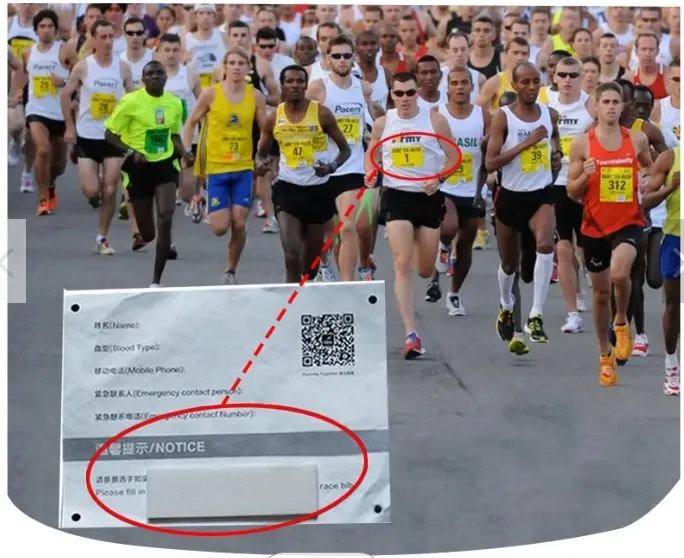
Seventy years on, the sub-4-minute mile occupies a category entirely its own. In a sport now governed by atomic clocks, RFID chip technology, and photo-finish systems capable of resolving results to one-thousandth of a second, this particular threshold continues to command a reverence that no other benchmark in distance running quite matches. Understanding why requires examining not just the achievement itself, but the cultural and competitive architecture that surrounds it.
A Barrier Built as Much in the Mind as on the Track
For much of the early twentieth century, sports scientists and coaches debated whether the human body could sustain the pace required to complete a mile in under four minutes. The psychological weight of that round number was immense. Several elite runners had approached it — Sweden's Gunder Hägg ran 4:01.4 in 1945, a record that stood for nine years — but the final barrier held.
Bannister's achievement was remarkable precisely because he understood that the obstacle was, in part, psychological. He trained deliberately and scientifically, incorporating interval sessions that were unconventional for the era, and he selected his attempt with tactical precision. When timekeeper Norris McWhirter announced the result over a crackling public address system, the crowd erupted before he could finish reading the seconds aloud — they already knew.
What followed illustrated something fundamental about human competitive behavior. Within 46 days, Australian John Landy broke Bannister's record. Once the barrier was gone, the perceived impossibility dissolved with it. Today, more than 1,700 athletes worldwide have run sub-4-minute miles, and the current world record, set by Morocco's Hicham El Guerrouj in 1999, stands at 3:43.13 — a full 16 seconds faster than Bannister's historic run.
How Timing Technology Has Transformed the Record Books
Bannister's 3:59.4 was recorded with hand-held stopwatches. By the standards of modern competitive timing, that introduces a margin of uncertainty that would be unacceptable in any sanctioned race today. Human reaction time alone can vary between 0.15 and 0.30 seconds, meaning Bannister's true clockable time could have differed measurably from the announced figure.
This is not a criticism of the achievement — it is a reminder of how dramatically the science of race measurement has advanced. Contemporary mile races at the professional level employ fully automatic timing (FAT) systems triggered by the starter's pistol and resolved by high-speed cameras at the finish line. The systems used at World Athletics-sanctioned events capture images at 10,000 frames per second, producing a precision that Bannister's era could not have imagined.
For competitive runners in the United States today, this evolution in timing infrastructure means that chasing a sub-4 is a pursuit measured with extraordinary accuracy. Every qualifying attempt at a collegiate or open track meet is documented through timing systems that leave no ambiguity. The record is the same — four minutes — but the confidence with which it is verified has transformed entirely.
Why American Runners Keep Chasing the Barrier
In the United States, the sub-4 mile holds particular significance within the collegiate and club running communities. Breaking four minutes remains a defining accomplishment for American distance runners at every level — from Division I programs at the University of Oregon and Stanford to post-collegiate club athletes training on local tracks across the country.
The number carries weight in recruiting conversations, in professional contract negotiations, and in the informal hierarchy that exists within the running community. A runner who has gone sub-4 occupies a different standing than one who has not, regardless of what other times they may hold. It is one of the few remaining thresholds in the sport where the achievement is understood immediately by a broad public audience, not just by coaches and statisticians.
For most recreational runners, a sub-4 mile is not a realistic personal target. Yet the barrier still shapes how the sport is discussed and understood. When a high school prodigy or a veteran masters runner approaches four minutes, the coverage intensifies. The milestone functions as a shared reference point across generations of athletes and fans.
The Myth and the Metric
There is an inherent tension in a sport that measures performance to the millisecond continuing to celebrate a record defined by a round number. The sub-4 mile is, in one sense, arbitrary — there is no physiological reason why 3:59.9 represents a categorically different level of performance than 4:00.1. Yet the barrier persists as a cultural touchstone because sport requires narrative, and narratives require thresholds.
Bannister himself understood this. In later years, he reflected that the mile's appeal lay in its human scale — long enough to require endurance and strategy, short enough to demand raw speed. The four-minute mark aligned with that scale in a way that felt almost inevitable once it had been achieved.
For the timing and results community, the Bannister legacy also serves as a reminder that numbers mean nothing without context. A finish time is a data point. What surrounds that data point — the history, the competition, the conditions, the technology used to capture it — determines its meaning. The sub-4 mile endures because it carries all of those elements in concentrated form.
Still the Standard
Modern track and field has produced faster times, more sophisticated training methods, and timing systems that Bannister's era could not have conceived. Yet no subsequent achievement has replicated the cultural resonance of that Oxford afternoon. The sub-4 mile remains the moment the sport points to when it wants to explain what it is capable of producing.
For runners at every level — from the collegiate athlete stepping onto a Division I track for the first time to the masters competitor chasing age-group records — the mile's four-minute barrier continues to function as a north star. It is a reminder that in a sport now defined by milliseconds and algorithmic performance metrics, a single round number, captured on a hand-held watch in 1954, still has the power to define what excellence means.