Resetting the Clock: How Athletes Over 40 Are Using Performance Data to Recapture Their Fastest Times

Photo: masters runner over 40 crossing race finish line with timing chip result, via c8.alamy.com
Dave Kowalski ran a 3:24 marathon in 2009. He was 34 years old, training 55 miles per week, and finishing in the top 15 percent of his age group at races across the Midwest. Then came a knee surgery, two job changes, a cross-country move, and the quiet arithmetic of a life that slowly deprioritized early morning long runs.
By 2019, he had not raced in seven years. By 2022, he had started running again — cautiously, without a watch, without a plan. By the spring of 2024, at age 49, he crossed a finish line in Indianapolis with a chip time of 3:21:47.
He had not merely returned to competitive running. He had broken his personal record by more than two minutes, fifteen years after setting it.
Kowalski's story is unusual in its specifics but increasingly common in its arc. Across the United States, a growing cohort of masters athletes — a designation that applies to competitors aged 40 and older in most sanctioned running events — are using a combination of modern performance analytics, age-graded timing tools, and structured comeback methodologies to return to racing with results that challenge the conventional assumptions about athletic decline.
The Data Didn't Forget
One of the most significant advantages available to returning masters athletes is something their predecessors in the 1980s and 1990s never had: a complete historical record of their own performance.
For athletes who raced during the era of chip timing — which became widespread at major U.S. road races beginning in the late 1990s — years or even decades of official results remain searchable in online databases. Platforms such as Athletic.net, RunSignUp's results archives, and individual race organization databases preserve split data, finish times, age group rankings, and course records that form the foundation of any serious comeback analysis.
This historical data serves a purpose that goes beyond nostalgia. When a returning athlete can pull up their official 10K splits from 2008, compare their mile-by-mile pacing strategy against their current training runs, and identify precisely where their fitness has degraded and where it has held, they are working with a specificity of information that no previous generation of masters competitors possessed.
Coaches who specialize in masters athletes describe this as the "baseline advantage" — the ability to set goals and structure training not against generic age-group averages, but against a documented personal performance history.
Age-Graded Standards and the Recalibrated PR
For athletes whose comeback goals extend beyond simply finishing, age-graded performance calculators have become an essential tool in the masters athlete's analytical toolkit.
Age grading — a methodology developed and periodically updated by World Athletics and adopted widely by U.S. road racing organizations — adjusts an athlete's finish time against a statistical model of peak human performance for their specific age and gender. The result is a percentage score that allows meaningful comparison across age groups and, critically, across different points in an athlete's career.
An athlete who ran a 42-minute 10K at age 32 and runs a 46-minute 10K at age 52 may appear, on the surface, to have declined significantly. Age-graded analysis might reveal that the 52-year-old performance actually represents a higher percentage of age-adjusted peak capacity — meaning the athlete is, in a physiologically meaningful sense, performing better relative to their potential than they were two decades earlier.
This reframing matters enormously for goal-setting and psychological motivation. The official clock never lies, but it also never tells the complete story. Age-graded tools give returning masters athletes a second, more nuanced metric through which to measure genuine progress.
Training Methodologies Informed by Timing Data
The comeback training plans that are producing results like Kowalski's are not built on intuition or general fitness advice. They are built on data — specifically, on the intersection of current physiological capacity and historical performance benchmarks.
Several principles have emerged from coaches and athletes who have successfully navigated masters comebacks.
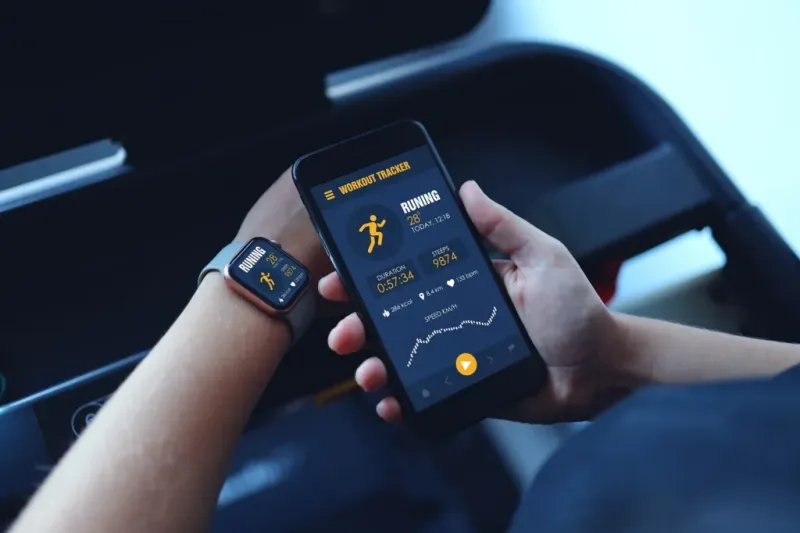
Heart rate variability as a recovery guide. Wearable devices that track HRV — a measure of the variation in time between heartbeats that correlates with recovery status — allow masters athletes to make daily training decisions based on objective physiological readiness rather than perceived effort. Recovery timelines lengthen with age, and overtraining is the most common cause of comeback derailment. HRV data provides an early warning system.
Split-informed pacing strategy. Athletes with access to their historical race splits can identify pacing patterns that led to strong finishes versus those that resulted in late-race fade. A runner who consistently ran negative splits — finishing faster than they started — in their best races has a documented pacing blueprint to rebuild toward, rather than relying on feel.
Volume periodization anchored to race results. Rather than building training volume according to a generic schedule, some masters coaches now use official race results from the athlete's comeback period as calibration checkpoints, adjusting weekly mileage and intensity targets based on how current race times compare to projected trajectories derived from historical data.
The Official Record as Motivational Architecture
There is a reason that masters athletes pursuing comebacks consistently cite their official race times — not training run performances, not app-generated metrics, but certified chip times from sanctioned events — as the primary benchmarks of their progress.
Official results carry a weight that no other performance data replicates. They are permanent, verifiable, and comparable. When a 47-year-old woman breaks her half-marathon personal record by 90 seconds at a USATF-certified event, that result enters a record that will exist indefinitely. It can be submitted to age group rankings. It can be used to qualify for elite corrals at major races. It represents something that happened in the world, not just on a training app.
For athletes who have been away from the sport for years, the first official result of a comeback — whatever the time — functions as a reset point. It is the new baseline from which every subsequent improvement is measured. The clock does not care about the gap years. It only records what is happening now.
Timing Records Don't Expire
The broader cultural narrative around athletic aging in the United States tends toward finality. Peak performance is understood as a window that closes, a trajectory that bends inevitably downward after the mid-30s. The data tells a more complicated story.
Masters world records in distance running events have been broken with striking regularity over the past two decades, a trend that reflects not a biological reversal of aging but the cumulative effect of better training science, superior nutrition protocols, improved injury management, and — critically — the analytical tools that allow older athletes to train with a precision that previous generations could not achieve.
For the returning athlete who has been away from competition for five years, or ten, or fifteen, the message embedded in that data is straightforward: the clock kept running while you were gone, but it was not running against you. It was simply waiting.
When you cross the next finish line, it will be ready to record exactly what you have become.