When the App Becomes the Official Record: How Fitness Platforms Are Rewriting the Meaning of a Personal Best
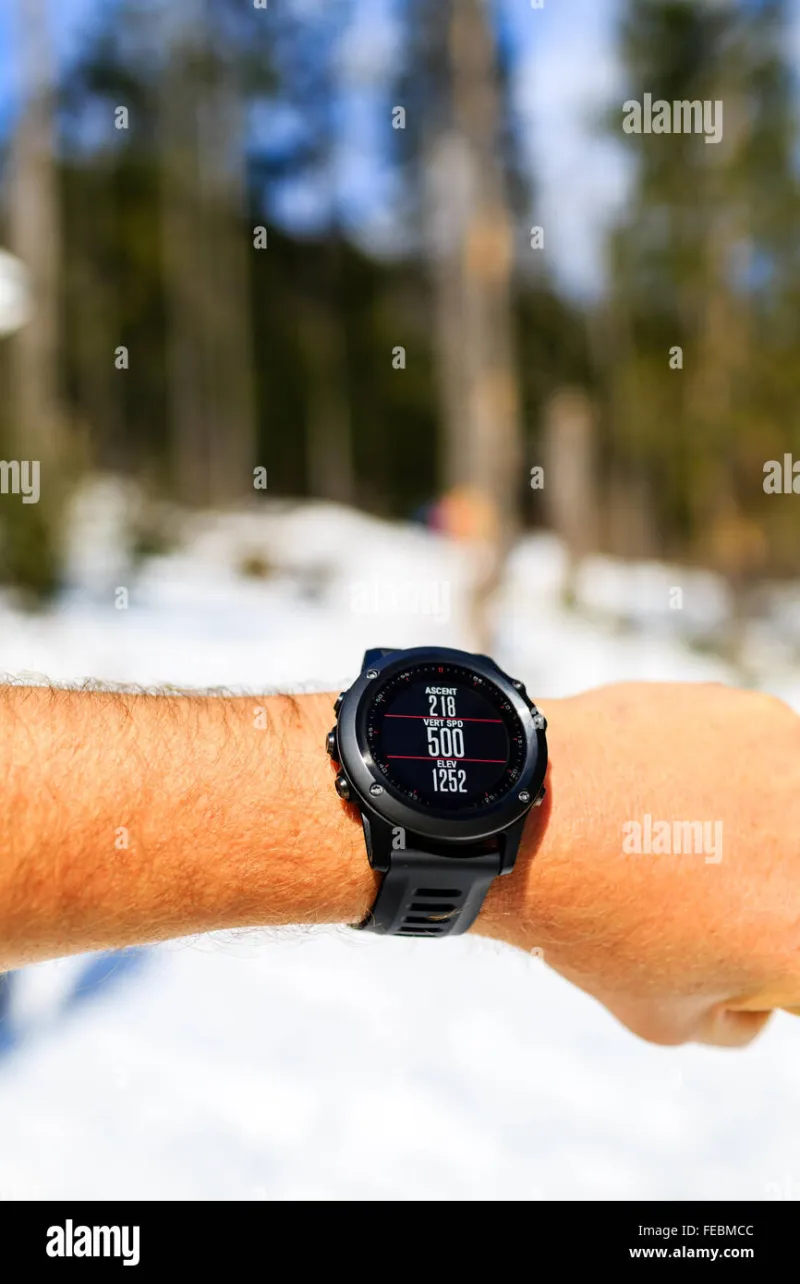
Photo: runner checking smartwatch GPS data on trail outdoors, via c8.alamy.com
A New Clock Has Entered the Building
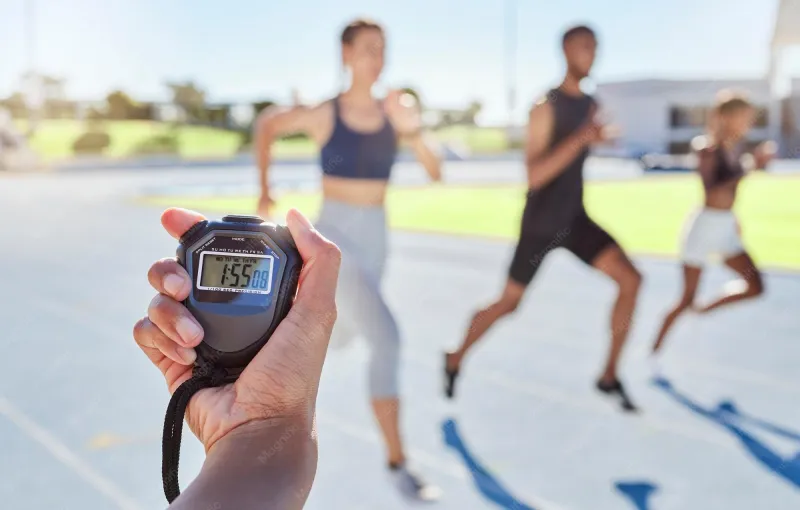
For decades, the personal record was a simple, unambiguous concept. You crossed a finish line, an official clock captured your time, and that number became the benchmark against which every future performance was measured. The stopwatch was the arbiter. The race director's results sheet was the final word.
That clarity, for better or worse, is eroding.
Today, millions of American runners carry sophisticated GPS devices on their wrists and upload their data to platforms that analyze, rank, segment, and socialize every step of every run. Strava alone reports tens of millions of active users globally, with a substantial portion concentrated in the United States. Garmin Connect, Nike Run Club, and similar ecosystems have created vast repositories of self-reported performance data — and with that data has come an entirely new vocabulary for achievement.
The question now confronting coaches, race directors, and competitive athletes alike is both simple and surprisingly contentious: when a runner's device tells one story and the official results database tells another, which record actually matters?
The Segment Record and the Leaderboard Life
One of the most significant cultural contributions of platforms like Strava is the concept of the segment — a user-defined stretch of road or trail on which runners compete for the fastest recorded time. Segment leaderboards have become fiercely contested territory, with athletes specifically targeting courses and conditions to claim or defend a coveted "Course Record" designation, colloquially known as a CR or KOM (King/Queen of the Mountain).
For many runners, holding a segment record carries genuine prestige, particularly in local running communities where a popular urban trail or familiar neighborhood loop functions as an informal proving ground.
"I've had athletes come to me prouder of a segment PR than a race PR," said one New England-based running coach who works primarily with masters and mid-pack competitors. "And honestly, in some cases, the effort was more impressive. They ran it alone, no race-day adrenaline, no crowd support. Just them and the data."
That sentiment reflects a broader shift in how effort and achievement are being contextualized. Official race results capture a single moment under specific conditions — weather, course certification, competition field, and race-day variables all influence the outcome. A GPS-tracked training run or segment effort, by contrast, can be repeated across seasons, refined through targeted training, and compared against a global field of self-selected participants.
The Data Scientists Weigh In
Performance analysts who work at the intersection of sports science and data technology are watching this trend with a mixture of admiration and caution.
The richness of the data now available to everyday runners is genuinely remarkable. Heart rate variability, cadence, vertical oscillation, ground contact time, and training load metrics that were once available only to elite athletes with dedicated coaching staffs are now embedded in consumer-grade wearables. Platforms synthesize this data into composite metrics — Garmin's Training Status, Strava's Fitness and Freshness curves — that attempt to quantify readiness and progress in ways a single race result never could.
However, the reliability of GPS-derived timing data remains a legitimate concern for anyone attempting to make rigorous performance comparisons. Consumer GPS devices can introduce distance measurement errors of one to three percent or more, depending on satellite signal quality, device calibration, and atmospheric conditions. A runner who believes they ran a 3:45 mile on a segment may have actually covered slightly more or slightly less than a mile, rendering the time technically incomparable to a certified track performance.
"The data is extraordinarily useful for training purposes," noted one sports performance researcher affiliated with a university human performance laboratory in the Midwest. "But when runners start treating GPS-derived segment times as equivalent to officially timed race results, they're comparing fundamentally different measurement systems. The precision simply isn't the same."
What Coaches Are Hearing From Athletes
The practical consequences of this cultural shift are landing squarely in the laps of running coaches, who increasingly find themselves navigating conversations about which numbers to trust and which to prioritize.
Coaches report that athletes now arrive to consultations armed with extensive platform data — weeks and months of logged runs, segment performances, and algorithmically generated fitness scores. While this information can be genuinely useful for structuring training, it also introduces complications when athletes anchor their expectations to metrics that may not translate directly to race performance.
A common scenario: an athlete who has been posting strong segment times on a familiar local course arrives at a certified road race expecting to translate that fitness into a PR, only to find that race-day conditions — a slightly different elevation profile, the psychological dynamics of competition, or simply an off day — produce a result that doesn't match their app-generated expectations.
The inverse also occurs. Athletes who have been logging what appear to be modest training numbers by platform metrics occasionally surprise themselves on race day, when the combination of course certification, competitive environment, and proper taper produces a performance their apps failed to predict.
Redefining the PR in a Data-Rich World
Perhaps the most substantive cultural debate emerging from this landscape concerns the very definition of a personal record. Traditionally, the PR existed within a specific context: a certified course distance, an officially timed event, a result that could be verified against a public results database.
Some athletes and coaches are now advocating for a more expansive interpretation — one that acknowledges effort-adjusted performances, grade-adjusted paces, and training-run achievements as legitimate markers of progress, even if they don't appear on an official results page.
The argument has merit in certain respects. A runner who achieves a personal-best effort on a hilly training route, measured by heart rate, perceived exertion, and GPS-tracked pace, has demonstrably improved. Dismissing that improvement because it occurred outside a sanctioned event seems, to many athletes, unnecessarily restrictive.
At the same time, the integrity of the official PR as a standardized, universally comparable benchmark depends on precisely the kind of rigorous measurement protocols that certified race timing provides. When every runner can define their own performance standard, the shared language of competitive achievement begins to fragment.
Every Second, in Context
The emergence of social timing platforms has not diminished the importance of official race results — if anything, it has sharpened the conversation about what precision timekeeping actually provides. Certified courses, calibrated timing systems, and verified results remain the gold standard for competitive comparison precisely because they eliminate the variables that make crowdsourced data so difficult to evaluate at face value.
What platforms like Strava have contributed is something different and genuinely valuable: a mechanism for tracking longitudinal progress, building community accountability, and finding motivation in the spaces between official events. For the vast majority of American runners who race infrequently but train consistently, those tools fill a real need.
The wisest approach, most coaches and analysts agree, is to treat official race results and platform-derived metrics as complementary rather than competing sources of information. The certified finish-line clock tells you where you stand against a universal standard. The app tells you how you got there.
Both clocks matter. Understanding what each one is actually measuring makes all the difference.